Marina Josephine Ruth Ann (Moore) Pageot Welham
November 29th, 1934 – August 30th, 2016*
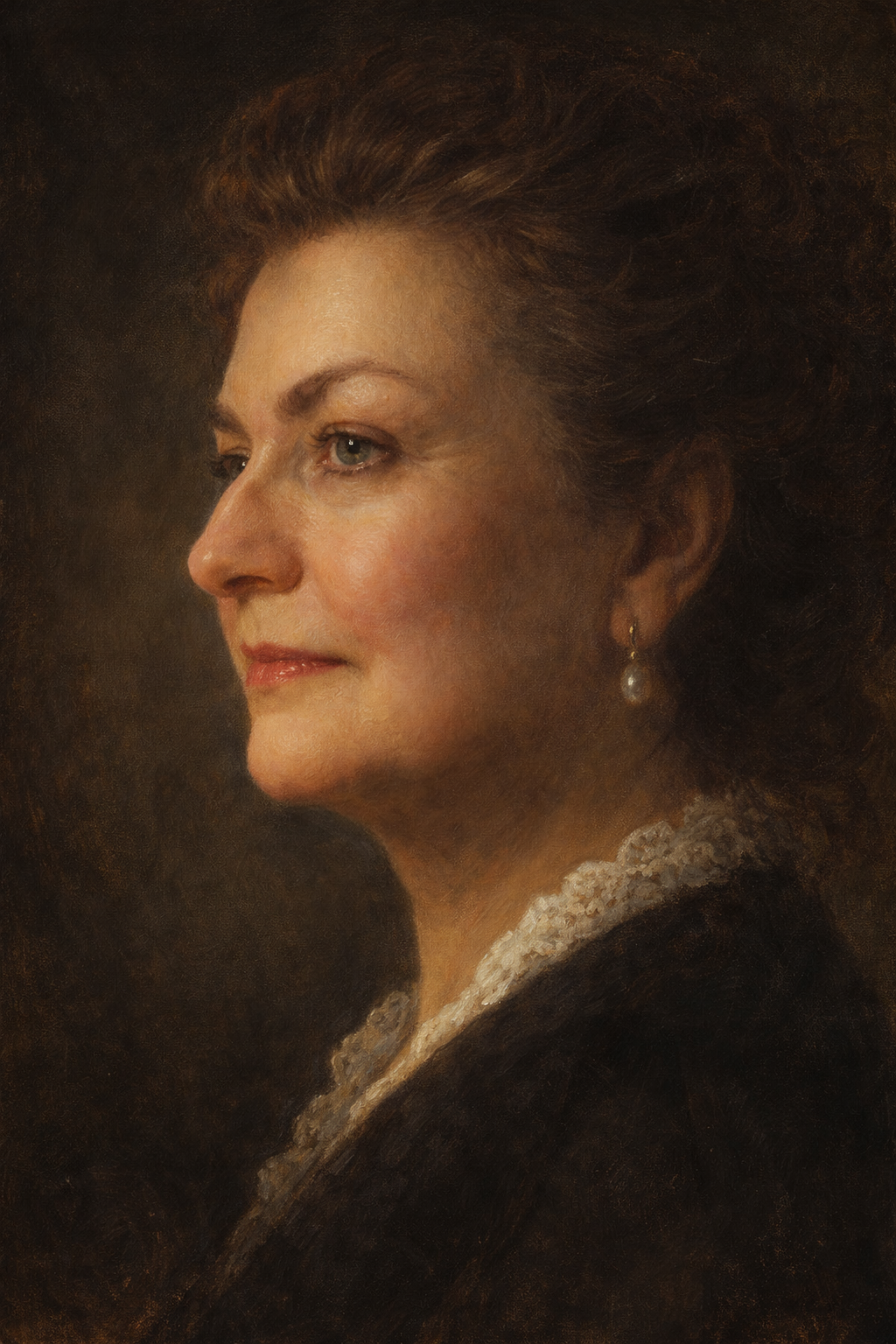
Marina was even more beautiful, but this is close.
Marina was a professional-level classical pianist. In this image, she must have been about 29 years old; she is pictured sitting at our vintage Heintzman studio grand piano. Marina studied piano for twelve years and could have pursued a career as a concert pianist. But she gave up that path to work as an administrative manager at an accounting firm, in order to provide for her daughter and support her family. As her daughter, I owe her a great debt of thanks for her sacrifice.
Marina’s Name
Marina was the youngest of three children, born about 12 twelve years after her two brothers, John and Bill, and a big surprise to her parents. Marina’s mother, Caroline Wright (of England) and her father, John Francis (Jack) Moore of Ireland, both then long-time subjects of the Crown in Canada, expressed they joy in their new daughter, and their patriotism, when they christened her after the up-and-coming Duchess of Kent: Princess Marina of Greece and Denmark who married Prince George, Duke of Kent, fourth son of King George V of the United Kingdom on November 29th, 1934, the day my mother was born. The autographed photo above of Princess Marina of Greece in her wedding gown, is signed and dated on her wedding day, my mother’s birthday: November 29th, 1934.
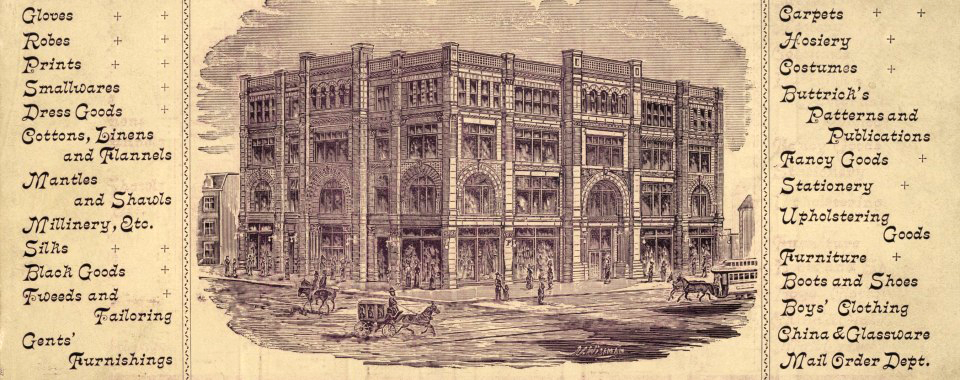
Both my mother and I were born on Thursdays, which Marina’s mother, my grandmother, Caroline, assured us was very good, because Thursdays were always “bargain days” at Morgan’s in downtown Montreal, her favorite place to shop. In other words, when Caroline brought Marina home, and when Marina brought me home, we were both “good bargains”. Morgan’s, across from Phillips Square in downtown Montreal was later renamed “The Bay”.
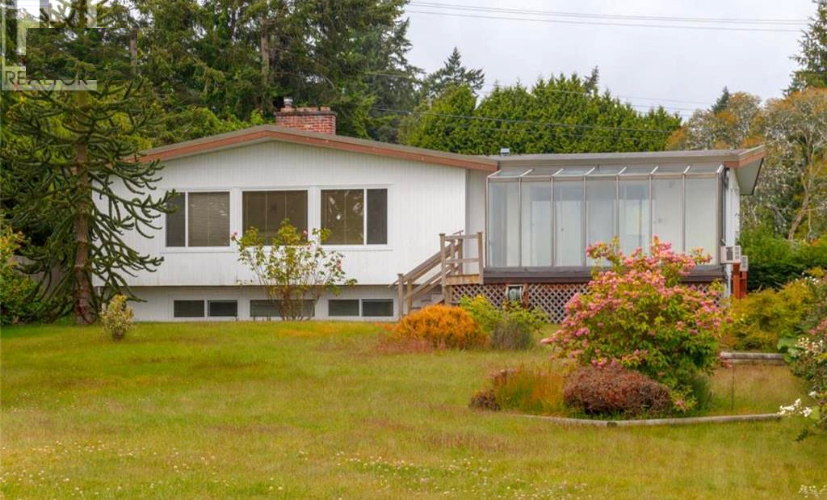
Marina Welham was for decades an expert on cacti and succulents, and had her own small glass greenhouse at home. She was the founder, editor and prolific author of The Amateurs Digest, a membership site for people around the world who shared her love of these amazing plants, found in almost every environment. This is a photo of our family home, above, empty, the glass greenhouse to the right is where Marina raised some of the plants she was talking about.
FUN QUOTATIONS FROM THE LATE MARINA WELHAM, as remembered by her daughter, in the passenger’s seat:
Marina, on hearing about feminism:
“I wouldn’t lower myself to be equal to a man.”
Marina, on seeing a police car in the rear-view mirror while
speeding down a highway:
“Quick, hand me my lipstick!”
Marina, swerving to avoid hitting a fat man crossing on red:
“Whew! That would’a been a mess!”
Love you, Mum. Miss you always. Kathleen.
This blog originally appeared at this address:
https://rememberingmarinawelham.blogspot.com/
*This is not the official date of Marina’s death. There are problems with the public trustee, who grabbed the estate in my absence and liquidated it, with obvious efforts, likely successful, to embezzle a large part of it for people not related to Marina and me. I suspect that Marina died January-February 2017.
*The portrait above is of Princess Marina of Greece on her wedding day. The royal princess was Marina’s namesake. I don’t currently have any photos of Marina because the public trustee who stole and sold most of the estate, confiscated all the family papers, photos and “mementos”, to use as an incentive to force me to sign my approval to their theft and destruction of Marina’s estate (my property as her named sole heir and executor) and Marina’s life’s work as a writer and publisher.
Honoring Grandma
My grandfather was like a father to me and often took me on long walks along the chain-link fence that ran alongside Western Avenue in the late 1950s in Montreal. That street is now called De Maisonneuve Boulevard. I looked a bit like Shirley Temple, with my blonde curls falling to my shoulders, my buttoned white cotton shirt, my knee-length cotton pants, and my practical shoes.
Western Avenue ran alongside the railroad tracks at the bottom of our street. There were vast tracts of land on either side of the tracks, and a large Italian neighborhood stretched out below. Italians are excellent gardeners, and they cultivated the land on the other side of the tracks with tomatoes, corn, pumpkins, and peas. My grandfather would take me up to the fence so I could watch the Italians tend their vegetable gardens on their side of the railroad tracks.
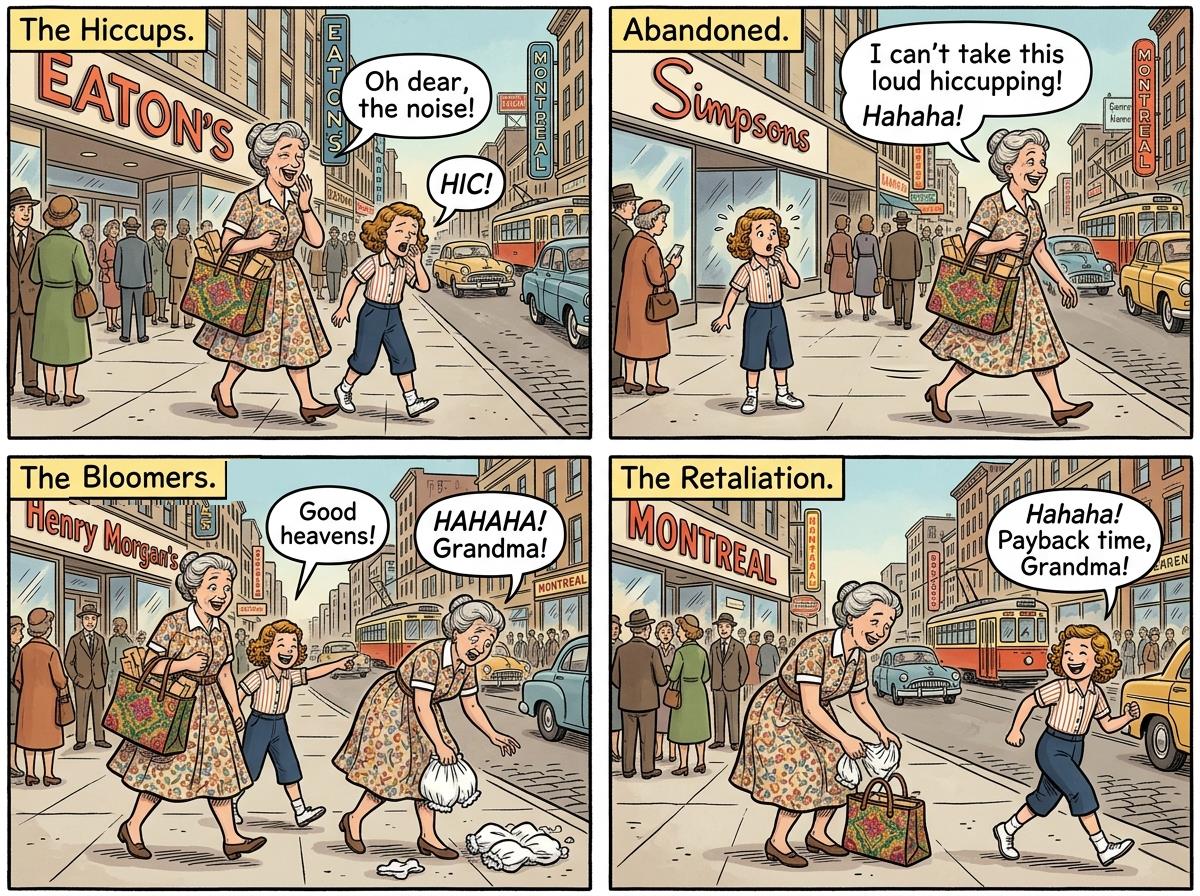
My grandmother (Caroline Wright Moore) always carried a brocade shopping bag on her arm, filled with packages, each wrapped in paper and tied with string. In the 1950s, plastic wrap didn’t exist yet. She wore her hair in a small bun at the nape of her neck and wore a cotton dress with a shirt collar and buttons down the front, along with a cotton belt and a flared or loose skirt that fell below her knees.
One day, my grandmother and I were shopping together downtown, somewhere near Eaton’s on Sainte-Catherine Street West. I suddenly got the hiccups. They were loud, and I couldn’t stop them. My grandmother laughed, but eventually, embarrassed to be seen in public with me, she left me there and walked away. But don’t worry—I got my revenge.
My grandmother was an old-fashioned English lady who liked to wear what were called “bloomers.” One day, while we were shopping downtown, the elastic in the waistband of her bloomers snapped, and her bloomers fell to the ground, right around her ankles! I laughed, then walked away while she picked them up, laughing, and put them in her shopping bag.
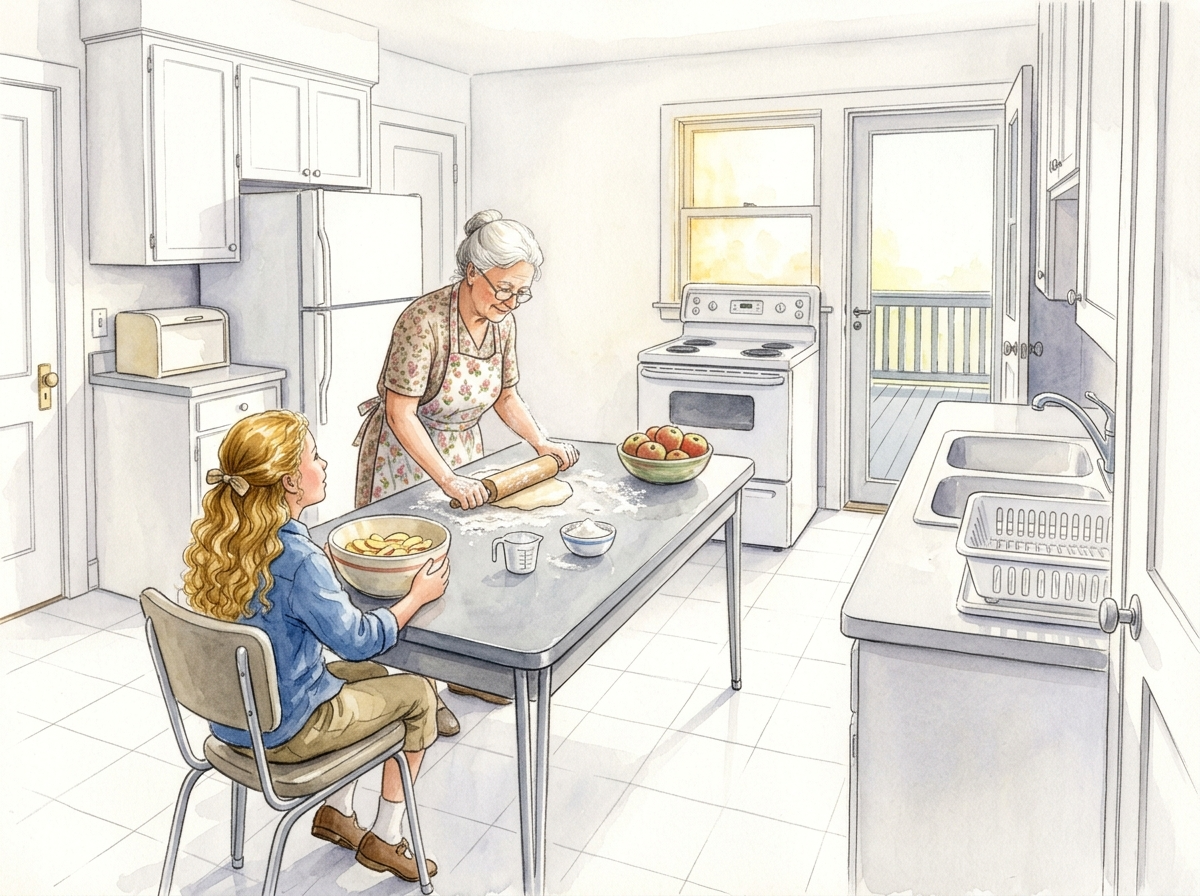
Grandma rolling out the pie dough
My favorite thing about spending time with my grandmother was when she let me help her prepare our groceries, or peel and cut McIntosh apples into pieces for her homemade pies. I would sit at one end of our gray Formica kitchen table and watch my grandmother sprinkle flour on the table and roll out the dough for a pie or tartlets with her wooden rolling pin.
Our kitchen was white. At one end was the door leading to the hallway; on the same side, right next to it on the left, was our fridge-freezer, and to the left of that, a small countertop where we kept a bread box. There were cupboards for dishes above the countertop and above the fridge.
In the middle of the kitchen, to the right of the Formica table, was a built-in countertop with a white ceramic dish rack; to the right of that, a built-in sink; and to the right of that, the door to a pantry.
Behind me, as I sat at the table, was our electric stove, where Grandma prepared her shepherd’s pie, her roast beef, her Yorkshire pudding, her minced tarts, her apple pies, and her chicken soup. Behind that was the back wall, with a window overlooking the stove and a door leading to our large, gray-painted family balcony, which overlooked our garden enclosed by an old gray wooden fence.
My grandmother loved finding bargains, as you already know. It mortified my mother every time Grandma brought something home from the Salvation Army store, like my first pair of ice skates for 25c, my sewing machine, and my first bike. Marina preferred to buy things new, or through the more respectable classified ads in the newspaper. However, I loved these things, and because they were wonderful to me, the idea of a bargain was wonderful, too. My grandmother would take me into the laneway beyond the old gray wooden fence to hold me up as I learned to pedal my bicycle.
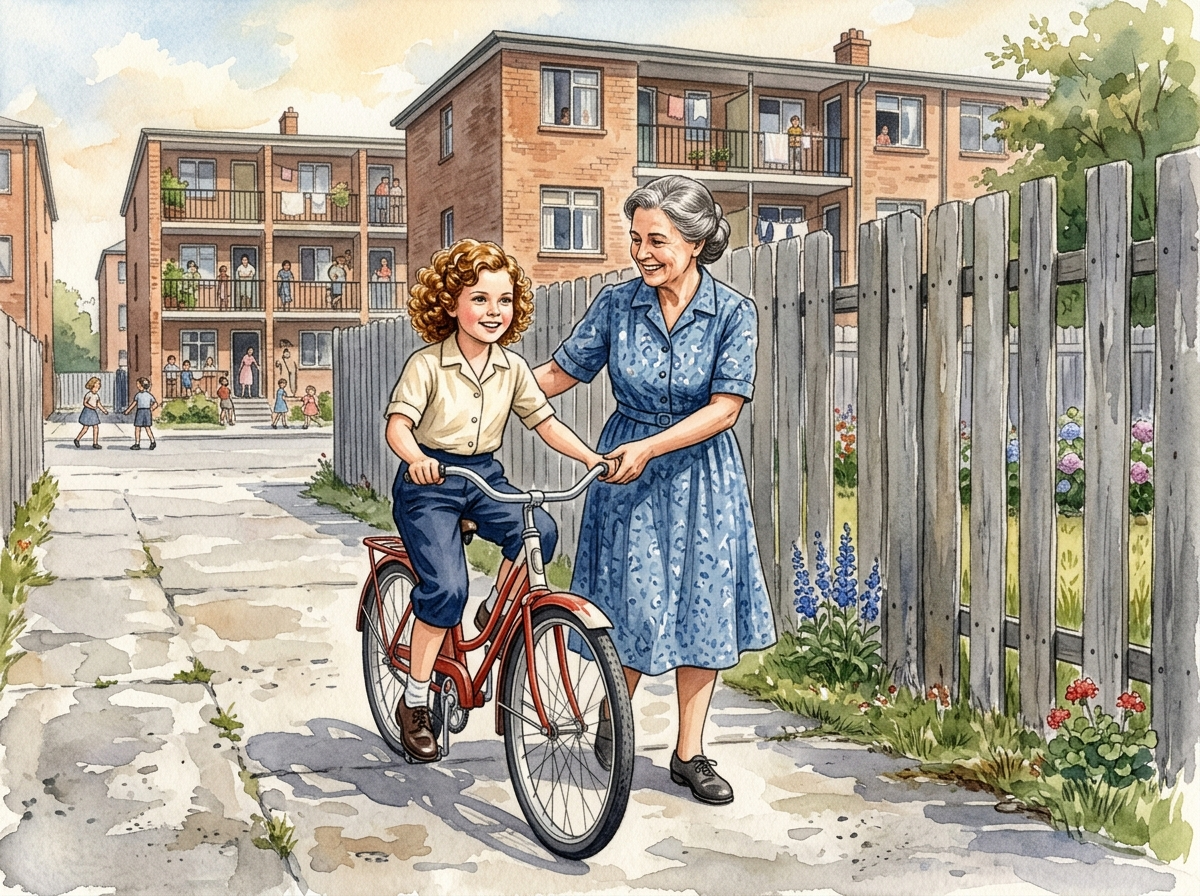
Grandma helping me to ride my bike
Honoring Granddad
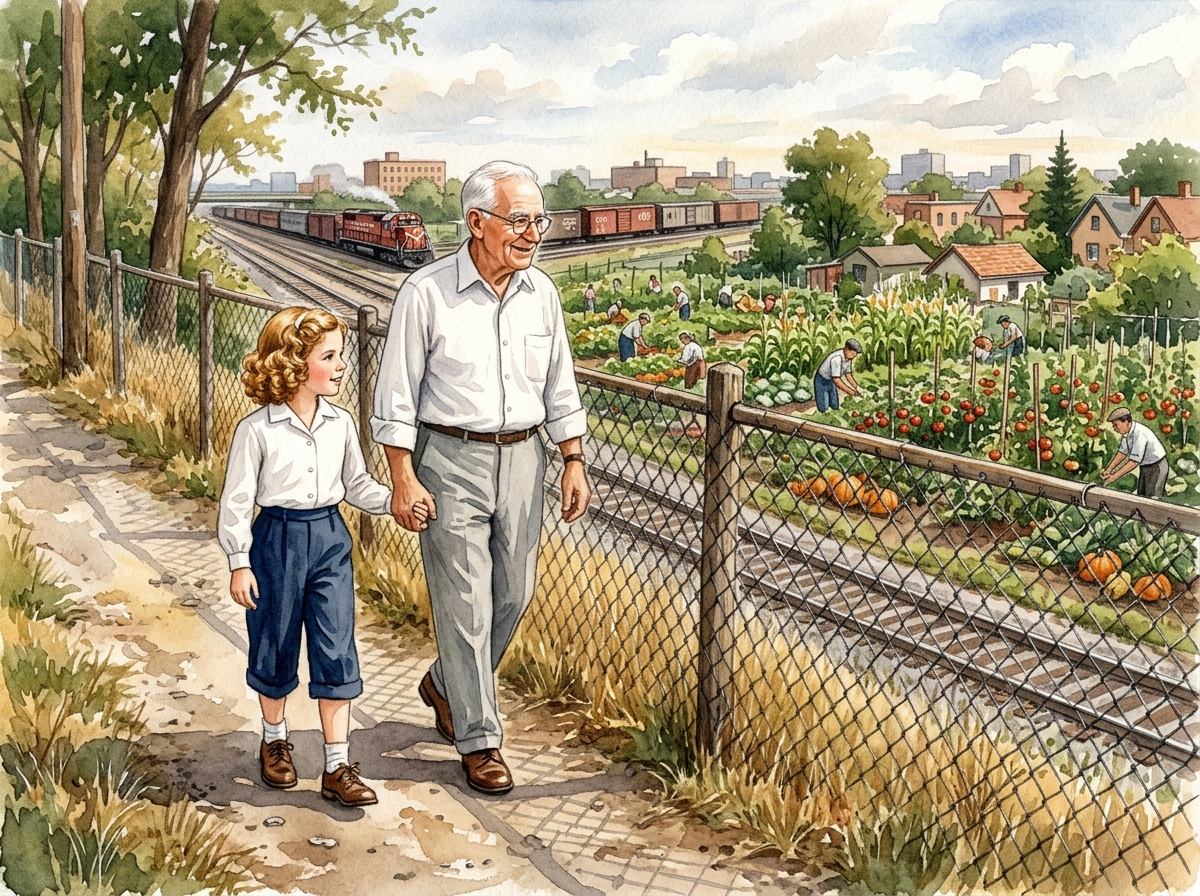
Out for a walk with granddad
My grandfather, John Francis (Jack) Moore, was an Irishman born in Ireland at the very end of the 19th century. He always refused to tell us about his origins.
I first remember Granddad as about five feet eight inches tall. He had pure white hair, wore metal-framed glasses, and always dressed in a white shirt and gray pants.
My grandfather was like a father to me and often took me on long walks along the chain-link fence that ran alongside Western Avenue in the late 1950s in Montreal. That street is now called De Maisonneuve Boulevard. I looked a bit like Shirley Temple, with my blonde curls falling to my shoulders, my buttoned white cotton shirt, my knee-length cotton pants, and my practical shoes.
Western Avenue ran alongside the railroad tracks at the bottom of our street. There were vast tracts of land on either side of the tracks, and a large Italian neighborhood stretched out below. Italians are excellent gardeners, and they cultivated the land on the other side of the tracks with tomatoes, corn, pumpkins, and peas. My grandfather would take me up to the fence so I could watch the Italians tend their vegetable gardens on their side of the railroad tracks.
Granddad smoked cigars in his upholstered armchair in the living room and kept them in a Thermidor cigar humidor, next to which stood a large, round, brown glass ashtray.
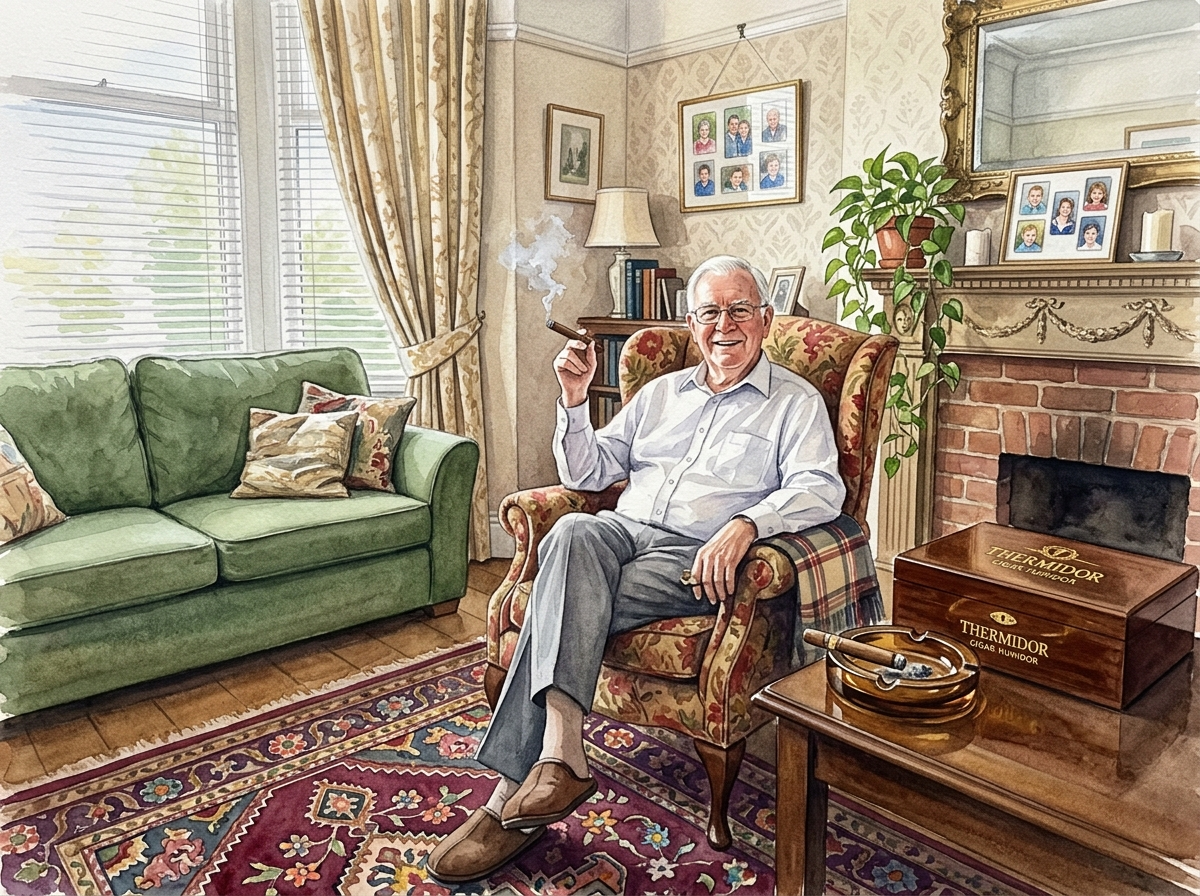
Granddad in his smoking chair
My grandfather was a sign painter and printer of wedding invitations, business cards, and so on. He also painted gold lettering on the storefronts in our neighborhood and lettering and images of all kinds on tall brick walls of business buildings in Notre-Dame-de-Grâce. We called it NDG for short, and my grandfather would always laugh and pretend that it stood for “No Damn Good.” It was actually a charming neighborhood, he was joking.
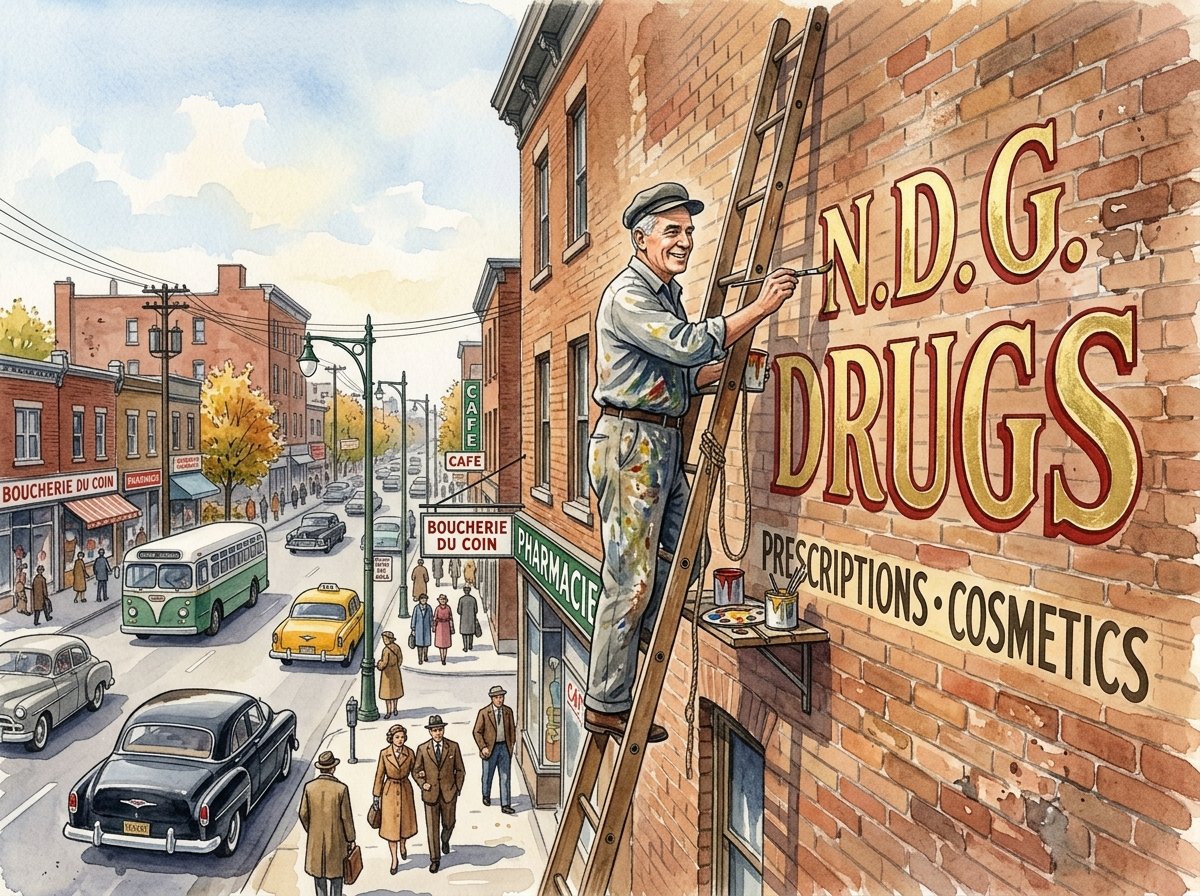
Granddad painting a sign in NDG
I would sit on the wooden slatted steps of the staircase leading to our basement, at our house on Hingston Avenue, to watch him operate the pedal of that enormous old black-iron press he was using, next to the chest of drawers filled with lead printing type.
He also had a large work table right under the stairs, above which hung a huge roll of white “sign paper.” For each job, he would pull a piece of paper onto his work table and pin it down with thumbtacks. Then he would take a paintbrush from the box on the shelf above the table, open a jar of “water-based paint,” and begin to paint his sign in calligraphy. He always finished his sign with a small decorative black touch, centered at the bottom. I loved the smell of fresh paint and the scent of ink and paper that filled the basement where he worked.
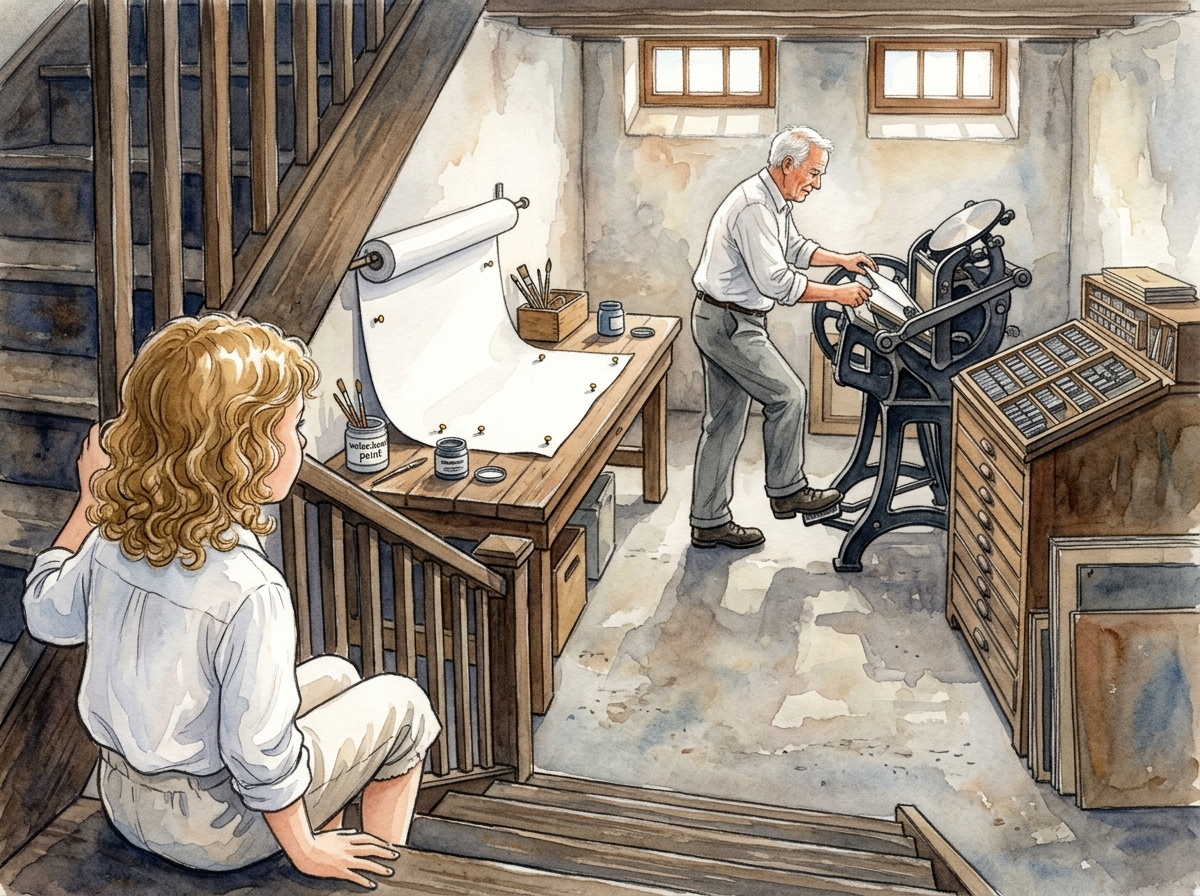
Grandad at his printing press
Grandad was a very proud man. He never took out a loan, preferring to work for years to save up for a house without a mortgage. The pictures on this page show roughly what the ground-floor duplex where we lived looked like. My grandmother was a handywoman. She installed a soundproof ceiling in our living room all by herself, painted the entire house, sanded the hardwood floors on her hands and knees, and then varnished them with Varathane. She also handled all the bookkeeping and prepared the invoices for grandad’s sign-painting business.
Grandma and Grandad were the perfect couple: they took care of each other, the house, and Marina and me. It was always nice to see them sitting together on the porch after a long day, having tea.
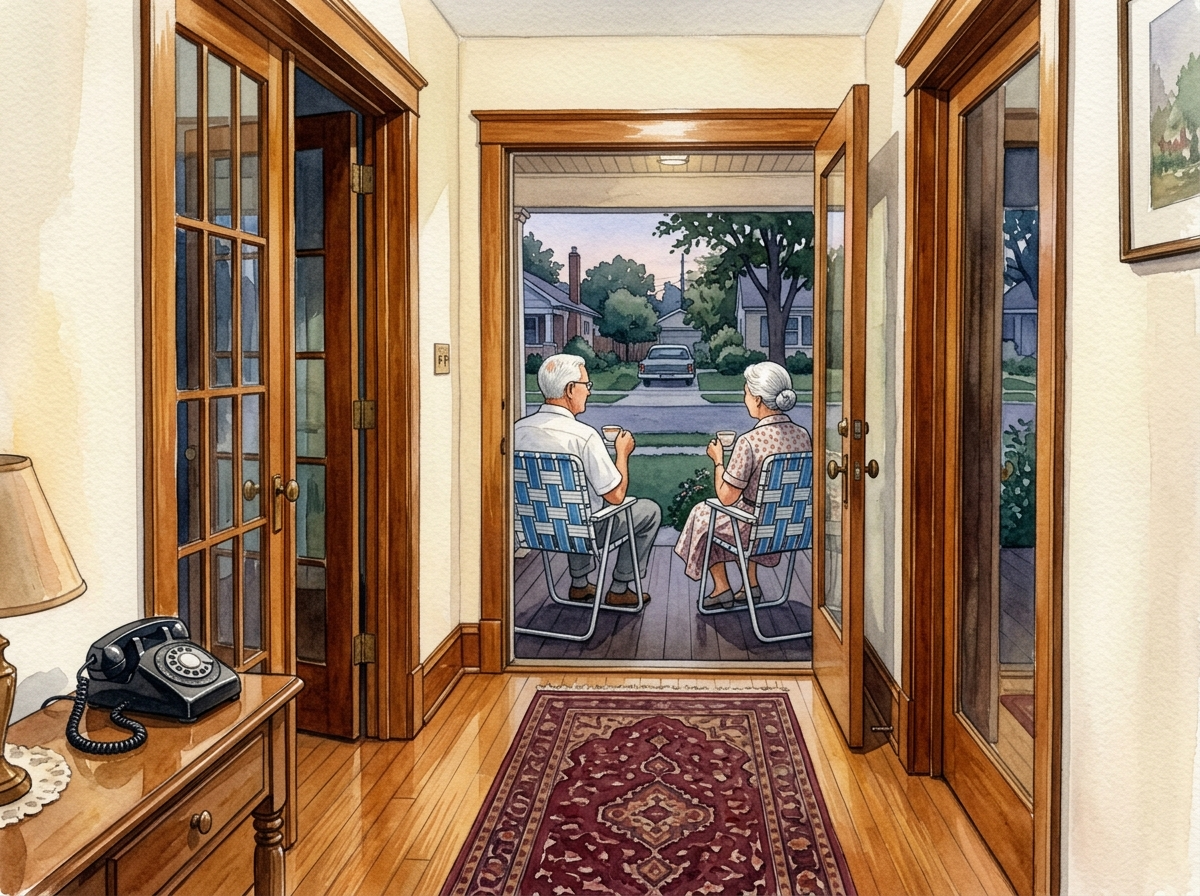
I can still picture them both, seen from behind, sitting quietly side by side on matching aluminum garden chairs—with seats and backs made of woven plastic—holding cups and saucers, without even needing to speak, because they were as one.
Remembering Marina
Marina was a concert-quality classical pianist. In this image, she would be about 29 years of age, sitting at our vintage Heintzman studio grand piano. Marina studied piano for twelve years and could have had a concert career. But she passed it up to go to work instead as an office manager for chartered accountants, to support her daughter and contribute to the family.
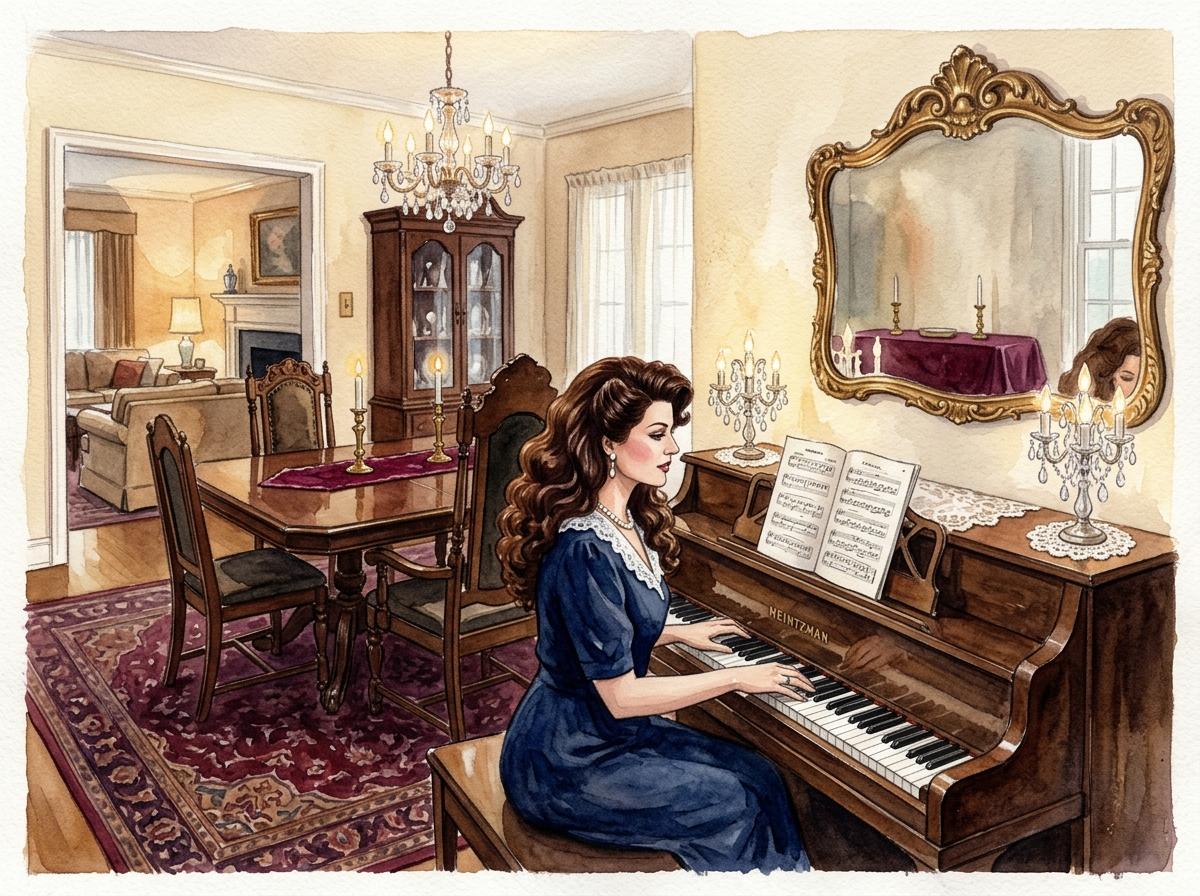
Marina playing the piano
Inspired by Marina, I studied piano for seven years. Occasionally, Marina and I played duets together. Sometimes we sat side by side at the piano; sometimes, I sat at the piano and Marina stood behind me, playing an accordion.
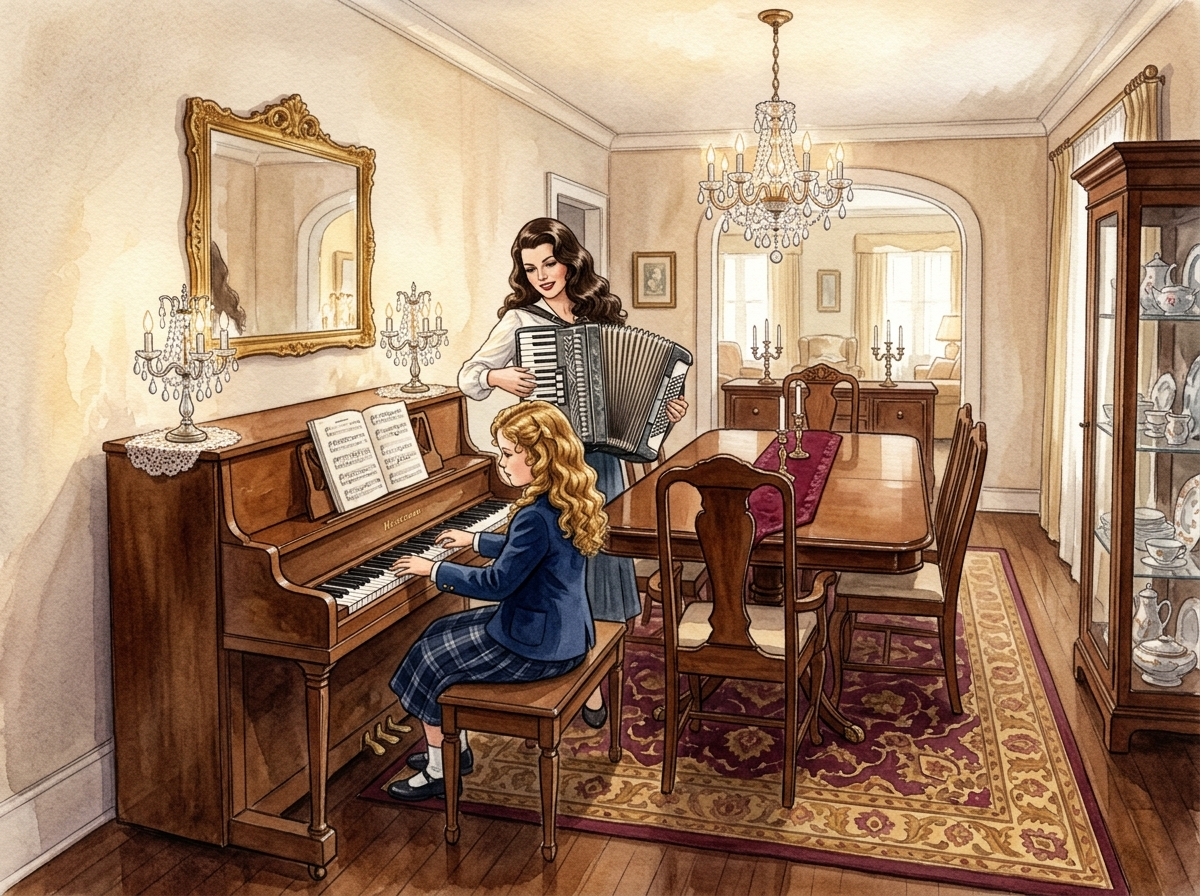
Marina and Kathy: a piano-accordion duet
In this image, I’m dressed for school: I’m wearing a perfectly ironed white blouse, a navy blue jacket, and a dark blue pleated plaid skirt. My grandmother Caroline would get up early every morning to iron a clean blouse for school and make coffee and breakfast for Marina and me.
Thanks to them, we had a beautiful home—and that was largely due to my grandmother, who worked tirelessly for us. She would take the bus to the farmers’ markets to find the best bargains, and she cooked from scratch, did the laundry, and ironed. She was up every morning well before 6:00 a.m., on her hands and knees scrubbing the kitchen floor with a hand-held brush, so that we had a sparkling place to enjoy our breakfast before Marina drove to work and dropped me off at school.
In the 1960s, we had a black Volvo; it was Marina’s car, and she had truly earned it. When we arrived at my high school, located at the top of the hill near the Roman Catholic Church of St. Augustine of Canterbury, the other students were already gathered by the fence, just to see my mother. After she drove away, they would all exclaim, every day, “Your mother is so beautiful!” It was truly special to be Marina’s daughter. It was a bit like unfair competition. The other mothers were stay-at-home moms. They didn’t have an excuse to get all dolled up, like Marina did, to go to work.
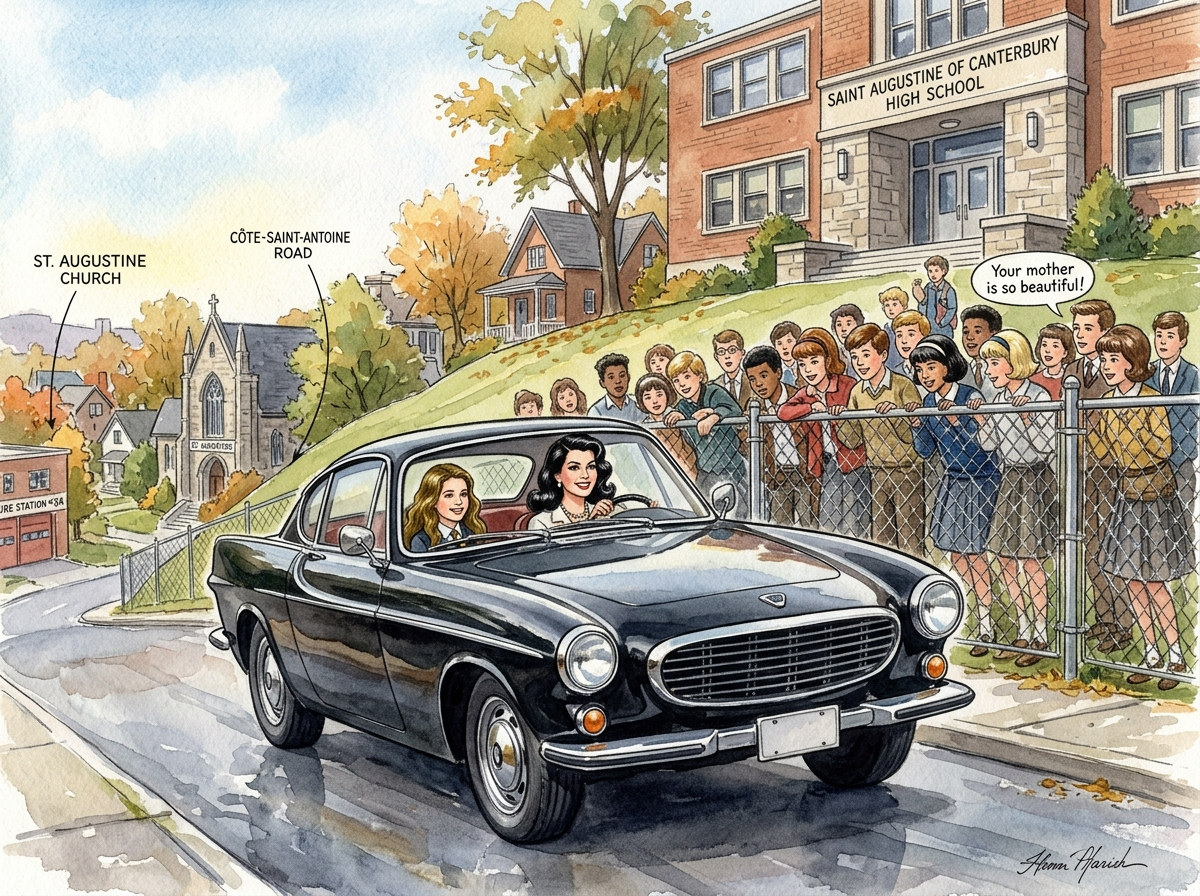
Marina drops me off at school
St. Augustine of Canterbury High School (also known historically as Saint Augustine of Canterbury School), was located at 5619 Côte-Saint-Antoine Road (at the corner of Marcil Avenue) in the Notre-Dame-de-Grâce (NDG) neighborhood of Montreal. It sat just up the hill from the original Saint Augustine of Canterbury Church (5565 Côte-Saint-Antoine) and just a block away from Fire Station #34 (which was famously built into the side of the NDG Library at Botrel Street).